Community Cats & TNVR
A humane, evidence-based approach that improves animal welfare, reduces shelter intake, and supports healthier neighborhoods.
Explore Gwinnett's ProgramWhat Are Community Cats?
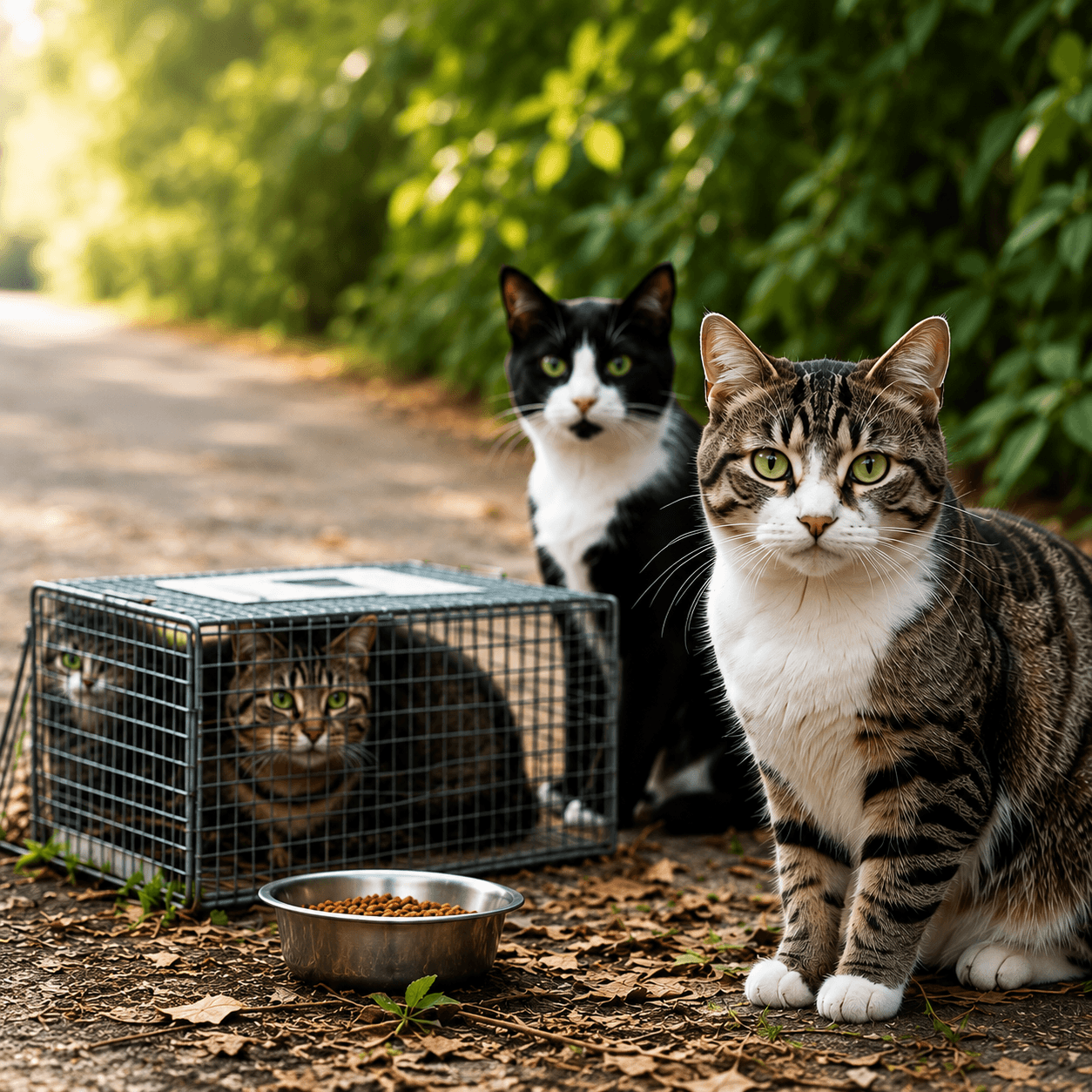
Community cats are unowned, free-roaming outdoor cats that may be friendly, unsocialized, or feral. They often live in family groups called colonies and may rely on community caregivers for food, shelter, safety, and medical support.
An estimated 50,000–70,000 community cats may live in Gwinnett County.
Without effective intervention, unsterilized cats continue reproducing, increasing the number of kittens born outdoors and placing additional pressure on shelters, rescue groups, caregivers, and neighborhoods.
How TNVR Works
Trap-Neuter-Vaccinate-Return (TNVR) is a humane, evidence-based approach to managing community cat populations while preventing future litters and improving animal welfare.
Trap
Cats are safely and humanely captured using appropriate live traps.
Neuter
Each cat receives spay or neuter surgery to prevent future litters.
Vaccinate
Cats receive important vaccinations, typically including rabies protection.
Return
After recovery, cats are returned to their familiar outdoor territory.
Benefits of TNVR
TNVR benefits animals, residents, taxpayers, neighborhoods, and the shelter system by preventing future litters before they occur.
Population Control
Sterilization prevents future litters and helps stabilize outdoor cat populations over time.
Saves Animal Lives
Preventing unwanted litters reduces kitten suffering and improves the health and welfare of existing colonies.
Reduces Shelter Strain
Keeping healthy community cats out of shelters preserves limited space and resources for animals requiring intervention.
Reduces Public Costs
Preventing shelter admissions can reduce spending on housing, feeding, staffing, and medical care.
Supports Public Health
Rabies vaccination helps protect cats, residents, pets, and the wider community.
Improves Coexistence
Sterilization reduces mating behaviors such as roaming, fighting, spraying, and excessive noise.
Why Prevention Matters
Community cat overpopulation has serious consequences for kittens, shelters, rescue organizations, taxpayers, and the animals themselves.
Outdoor Kitten Survival
Many die from preventable causes or treatable illnesses, including upper respiratory infections.
Where Kittens Come From
Expanding TNVR is one of the most effective ways to prevent future litters and reduce suffering.
Sheltering Community Cats Is Expensive.
In 2025, Gwinnett County Animal Shelter admitted 2,492 cats. Of those, 1,740 were adopted, 63 were reunited with their owners, 251 were transferred to rescue organizations, and 337 cats died or were euthanized.
At an estimated average cost of approximately $750 per animal, caring for these cats represented nearly $2 million in shelter-related expenditures. Expanding Trap-Neuter-Vaccinate-Return (TNVR) helps prevent future litters, reduces unnecessary shelter admissions, and allows limited shelter resources to be focused on animals that truly require intervention.
Gwinnett County's Community Cat Program
Gwinnett County offers free TNVR services for eligible community cats through the Bill Atkinson Animal Welfare Center. Appointments are offered on weekdays on a first-come, first-served basis, with limits on the number of cats accepted each day and per household.
Each appointment includes:
Cats must be transported in individual humane traps. Residents should confirm current appointment availability, eligibility, drop-off instructions, and program requirements directly with Gwinnett County before trapping.
Program Snapshot
County-reported figures show that Gwinnett's existing program is providing an important service, while unused appointments suggest opportunities for greater awareness, accessibility, and participation.
2025
First Quarter 2026
Unused appointments represent an opportunity.
Increasing public awareness, improving accessibility, and supporting community caregivers could help more residents use available appointments and prevent more future litters.
Opportunities to Strengthen the Program
Gwinnett County already has an important foundation in place. Practical improvements could make the program easier to use and help more community cats receive timely services.
Expand Scheduling Options
Additional scheduling flexibility or alternative drop-off arrangements could improve access for working residents.
Increase Public Education
Coordinated outreach could help residents understand TNVR, locate available services, and learn how to participate.
Support Community Caregivers
Caregivers and volunteers need clear guidance, reliable communication, and practical support to manage colonies successfully.
Increase Access to Humane Traps
Expanded trap-loan programs could remove one of the most common barriers to participating in TNVR.
Accommodate Larger Colonies
Flexible or higher-capacity appointments could help residents working with larger colonies address them more efficiently.
Expand Volunteer Partnerships
Partnerships with experienced trappers, caregivers, rescues, and volunteers could increase the program's reach and effectiveness.
Focus Eligibility on Where the Cats Live
Some experienced volunteers live outside Gwinnett but trap cats located inside the county. Exploring ways to work with them could help more Gwinnett cats receive services.
Track and Share Outcomes
Regular reporting on available appointments, utilization, neighborhoods served, and program outcomes can help guide future improvements.
Preventing future litters is one of the most effective ways to reduce suffering.
Unsterilized community cats account for a substantial share of kittens born each year. Many outdoor kittens do not survive, while others enter shelters or require intervention from already stretched rescue organizations and volunteers. Humane prevention benefits cats, residents, neighborhoods, and the county as a whole.
How You Can Help
Community cat management depends on informed residents, dedicated caregivers, volunteers, rescue partners, and accessible public services.
- Learn how TNVR works and share accurate information.
- Help community caregivers access humane traps and transportation.
- Volunteer with a local community cat or rescue organization.
- Share information about Gwinnett County's available program.
- Support responsible colony care, vaccination, and monitoring.
- Advocate for accessible, well-supported TNVR resources.
Humane Solutions Require Community Support
Expanding access to TNVR can prevent suffering, reduce future shelter intake, support healthier neighborhoods, and create better outcomes for community cats throughout Gwinnett County.
Take Action